July 1940
Edward’s Wartime Birth
[Edward Mayhew](entity:character-recall-character-edward-mayhew-1834966e9634) was born in the [Chiltern Hills](entity:location-recall-location-chiltern-hills-78b96367863d) during the week the [Battle of Britain](entity:event-recall-event-3515d62dd2fd) began. His father later joked that the country had briefly held its breath over whether German would become Edward Mayhew’s first language, a story that tied an ordinary rural childhood to the anxieties of wartime Britain.
The family lived in a remote cottage at [Turville Heath](entity:location-recall-location-turville-heath-0c5249320b93). When Edward Mayhew arrived, the house still relied on well water; mains water was brought to it that September, after local officials judged the household’s water arrangements an urgent sanitary concern.
December 1944
The Railway Accident
While pregnant with twins, [Marjorie Mayhew](entity:character-recall-character-marjorie-mayhew-6cbc1d4cdc84) was struck by the heavy door of a train as it braked at a station. The blow fractured her skull, and after a coma lasting almost a week she was left with profound damage to her personality, memory, and intelligence.
The passenger who had opened the carriage door hurried away and was never found. The accident reshaped the Mayhew household and left [Lionel Mayhew](entity:character-recall-character-lionel-mayhew-7ffc45343cec) to shoulder the work of raising the children while keeping the family’s fragile routines intact.
Edward Mayhew’s early childhood
Life in the Mayhew Cottage
[Lionel Mayhew](entity:character-recall-character-lionel-mayhew-7ffc45343cec) worked as a school headmaster and managed the cooking, housework, and care of the children in a cramped, cluttered home. The children helped as best they could, while the family accepted dirt and disorder as part of ordinary life.
[Marjorie Mayhew](entity:character-recall-character-marjorie-mayhew-6cbc1d4cdc84) drifted among painting, gardening, music, and other projects, often believing that she had completed domestic tasks she had not done. The children and their father quietly sustained this make-believe, protecting her from the painful truth and learning to live around what remained of her former self.
May 1954
Edward Learns the Truth
At fourteen, [Edward Mayhew](entity:character-recall-character-edward-mayhew-1834966e9634) heard [Lionel Mayhew](entity:character-recall-character-lionel-mayhew-7ffc45343cec) explain that [Marjorie Mayhew](entity:character-recall-character-marjorie-mayhew-6cbc1d4cdc84) had suffered brain damage in the railway accident. The phrase felt brutal, but it also gave Edward Mayhew a name for a reality he had always sensed without understanding.
The knowledge opened a new distance between Edward Mayhew and his family. He began to imagine himself as someone who would leave the cottage and return only as a visitor, while continuing to treat his mother with kindness and help maintain the household’s comforting pretence.
Mid-1950s
A Private Future
As [Edward Mayhew](entity:character-recall-character-edward-mayhew-1834966e9634) advanced at school, teachers began to speak of university, while many of his village friends expected to enter trades or face National Service. He concealed his growing sense of separation, worked hard, and dreamed of a life beyond [Turville Heath](entity:location-recall-location-turville-heath-0c5249320b93).
After hitchhiking to [London](entity:location-recall-location-london-420923d4a60a) for a rally against the Suez invasion, Edward Mayhew decided that he would not apply to [Oxford](entity:location-recall-location-oxford-6b47fed333f9). The crowded city seemed more different from home, and keeping the decision secret let him preserve the private self he had begun to build.
1958 to 1961
Separate Student Lives
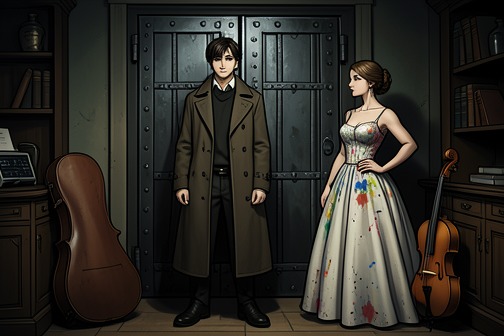
[Edward Mayhew](entity:character-recall-character-edward-mayhew-1834966e9634) studied history at [University College London](entity:organization-recall-organization-university-colle-19b8855f5cf9), spending his days on books and his evenings listening to blues in [London](entity:location-recall-location-london-420923d4a60a) clubs. He imagined a sexually liberated world just beyond the limits of his own experience, but the women he knew seemed to be keeping themselves for marriage, and sexual talk remained boastful, indirect, and unreliable.
[Florence Ponting](entity:character-recall-character-florence-ponting-eef5f78b7a58) studied violin at the [Royal College of Music](entity:organization-recall-organization-royal-college-of-51cfb99987ca) and lived in a strictly supervised women’s hostel. Concerts, practice, and close friendships filled her days; she found independence in music and the warmth of her circle, while relationships with male students seemed likely to take women away from their friends and ambitions.
1959
The Ban the Bomb March
[Edward Mayhew and Florence Ponting](entity:relation-recall-relation-edward-mayhew-and-fl-fdfc7cb4aa18) were both in Trafalgar Square among the crowd calling for nuclear disarmament. They did not meet there, but later found it thrilling that their paths had crossed within the same enormous gathering.
Their shared opposition to nuclear weapons formed part of the political atmosphere in which their later courtship developed. Their convictions were not identical, however: [Florence Ponting](entity:character-recall-character-florence-ponting-eef5f78b7a58) regarded the Soviet Union more sympathetically than her mother did, while [Edward Mayhew](entity:character-recall-character-edward-mayhew-1834966e9634)’s views were tested by the Ponting family’s arguments.
Summer 1961
A Summer of Waiting
After their college courses ended, [Edward Mayhew](entity:character-recall-character-edward-mayhew-1834966e9634) returned to his family home in the [Chiltern Hills](entity:location-recall-location-chiltern-hills-78b96367863d), while [Florence Ponting](entity:character-recall-character-florence-ponting-eef5f78b7a58) went back to her parents’ house in [Oxford](entity:location-recall-location-oxford-6b47fed333f9). Both waited for exam results and the next stage of their lives, restless in surroundings that suddenly felt too small.
Edward Mayhew read about medieval religious movements and imagined writing short histories of obscure figures caught near great events. Florence Ponting weighed the uncertain prospects of a quartet career against orchestra work or a hotel ensemble, unwilling to surrender the musical life she wanted before she had tried to make it possible.
Summer 1961 before their first meeting
An Unexpected Trip
Bored by the quiet of home, [Edward Mayhew](entity:character-recall-character-edward-mayhew-1834966e9634) took his bicycle out without a plan, rode through the Chiltern countryside, and continued to [Henley](entity:location-recall-location-henley-bc7c906e6f9d). At the station, he found a train going to [Oxford](entity:location-recall-location-oxford-6b47fed333f9) rather than [London](entity:location-recall-location-london-420923d4a60a) and took it into the city.
There, a handwritten notice for a [Campaign for Nuclear Disarmament](entity:organization-recall-organization-campaign-for-nuc-70c5788ca4ae) meeting drew him into a dim hall. The accidental choice put him in [Florence Ponting](entity:character-recall-character-florence-ponting-eef5f78b7a58)’s path and turned an aimless day into the beginning of their relationship.
Summer 1961 before their first meeting
Florence’s Family Tensions
Back at home, [Florence Ponting](entity:character-recall-character-florence-ponting-eef5f78b7a58) felt hemmed in by domestic questions, her mother’s teasing about violin practice, and her father’s energetic business talk. She loved her family but found it difficult to voice anger, often leaving a room rather than risk saying something she would later regret.
She also felt the strain of deciding whether to pursue the quartet or take a less demanding job. Her father’s generosity and attention made independence complicated, while the prospect of lodging with the cellist [Charles Rodway](entity:character-recall-character-charles-rodway-99e454e048a3) seemed to place her too much under his influence.
Summer 1961
The First Encounter
At the meeting in [Oxford](entity:location-recall-location-oxford-6b47fed333f9), [Florence Ponting](entity:character-recall-character-florence-ponting-eef5f78b7a58) was helping distribute a pamphlet about the consequences of a hydrogen bomb falling on the city. [Edward Mayhew](entity:character-recall-character-edward-mayhew-1834966e9634) approached her without knowing what to say; she offered him a copy, and her finger brushed his wrist as he took it.
Edward Mayhew stayed beside her instead of moving away. Their first exchange was slight, but each noticed the other: he was struck by her sculpted, unreadable beauty, and she was curious about the young man who had walked into the room as if he belonged there.
Summer 1961 after their first meeting
A Shared Political Future
[Edward Mayhew and Florence Ponting](entity:relation-recall-relation-edward-mayhew-and-fl-fdfc7cb4aa18) began comparing their childhoods, opinions, and hopes. Their conversations ranged across politics and history, even as their differing views about nuclear weapons and the world’s future revealed that affection did not mean complete agreement.
Their relationship offered each a new kind of intimacy, but neither had an easy language for private feelings. They were drawn together through talk and shared time while leaving much of what mattered most unspoken.
Early autumn 1961
The Riverbank Conversation
On the [River Cherwell](entity:location-recall-location-river-cherwell-5dda313b54df), [Edward Mayhew and Florence Ponting](entity:relation-recall-relation-edward-mayhew-and-fl-fdfc7cb4aa18) recalled the first time they had seen one another. [Florence Ponting](entity:character-recall-character-florence-ponting-eef5f78b7a58) remembered his loose shirt, worn clothes, and slightly wild appearance; [Edward Mayhew](entity:character-recall-character-edward-mayhew-1834966e9634) teased her about having noticed him at all.
The conversation brought them close enough to hold each other’s gaze without their usual embarrassment. When Edward Mayhew asked whether she had believed in love at first sight, Florence Ponting admitted that she had been curious about him, though she had not yet understood that curiosity as the beginning of a relationship.
Autumn 1961
Florence Forms Her Quartet
After discovering discarded rehearsal notes from the Amadeus Quartet, [Florence Ponting](entity:character-recall-character-florence-ponting-eef5f78b7a58) took them as an encouragement to assemble a group of her own. She invited the strongest students she knew, including [Charles Rodway](entity:character-recall-character-charles-rodway-99e454e048a3), and insisted that they tackle a Mozart quintet despite the extra viola player it required.
Florence Ponting proved decisive in rehearsal, listening to disagreements and then setting the direction. The ensemble became the [Ennismore Quartet](entity:organization-recall-organization-ennismore-quarte-fabc3dcd9a8c), giving her a demanding shared purpose and a possible route toward a professional musical life.
Autumn 1961 to spring 1962
The Courtship’s Slow Advances
[Edward Mayhew and Florence Ponting](entity:relation-recall-relation-edward-mayhew-and-fl-fdfc7cb4aa18) moved toward physical intimacy through a cautious series of permissions. [Florence Ponting](entity:character-recall-character-florence-ponting-eef5f78b7a58) allowed [Edward Mayhew](entity:character-recall-character-edward-mayhew-1834966e9634) to see her breasts before she allowed him to touch them, and later permitted brief caresses that he treated as precious signs of progress.
Neither spoke directly about what each wanted. Edward Mayhew mistook her reticence for coyness and a hidden sensuality, while Florence Ponting struggled to name her distaste and fear. Their silence allowed hope to grow alongside a serious, unrecognized mismatch.
Winter 1961
The Cinema Misstep
During a cinema screening of A Taste of Honey, [Edward Mayhew](entity:character-recall-character-edward-mayhew-1834966e9634) abruptly took [Florence Ponting](entity:character-recall-character-florence-ponting-eef5f78b7a58)’s hand and placed it between his legs. Florence Ponting recoiled and became distant, though she never stopped reassuring him that she loved him.
Edward Mayhew understood that he had undone weeks of careful progress, but not how profound her discomfort was. The episode reinforced their pattern: a sudden advance, a retreat neither could explain, and a gradual return to closeness without an honest conversation about the source of the difficulty.
January 1961
Edward’s Fight in Soho
Walking through Soho with his university friend [Harold Mather](entity:character-recall-character-harold-mather-1503bdbe3494), [Edward Mayhew](entity:character-recall-character-edward-mayhew-1834966e9634) saw a passing man strike Harold Mather from behind and knock his glasses into the road. Edward Mayhew rushed after the attacker, pinned him against a wall, and hit him hard before returning to help Harold Mather recover the damaged glasses.
Harold Mather was not grateful; he was embarrassed by the violence and gradually withdrew from the friendship. Edward Mayhew came to see the assault not as an act of rough justice but as a vulgar failure of judgment, and he avoided fights afterward.
Spring 1962
The Proposal
One rainy afternoon at [Edward Mayhew](entity:character-recall-character-edward-mayhew-1834966e9634)’s family home, [Florence Ponting](entity:character-recall-character-florence-ponting-eef5f78b7a58) briefly rested the back of her hand near his penis. She felt it stir beneath his clothes and recoiled from the separate, living thing she sensed there, though she had wanted to please him.
Edward Mayhew, overwhelmed by desire and hope, asked Florence Ponting to marry him. The sudden proposal brought delight and relief, but it also began a private conflict for Florence Ponting: the promise of marriage seemed to demand the very sexual intimacy that frightened her.
Summer 1961 after the proposal
Florence’s Visit to Turville
[Florence Ponting](entity:character-recall-character-florence-ponting-eef5f78b7a58) surprised [Edward Mayhew](entity:character-recall-character-edward-mayhew-1834966e9634) by walking from [Henley](entity:location-recall-location-henley-bc7c906e6f9d) to the cricket ground where he worked. She had followed a map through the countryside and watched him from the pavilion before revealing herself; together they walked back beneath the lime trees and shared an orange.
Her pleasure in the walk and her affection for Edward Mayhew made the day feel free and complete. When she later met the Mayhew family, she fitted into their lives with an ease that made them love her, and [Lionel Mayhew](entity:character-recall-character-lionel-mayhew-7ffc45343cec) urged his son not to let her go.